


Product Model Dispay
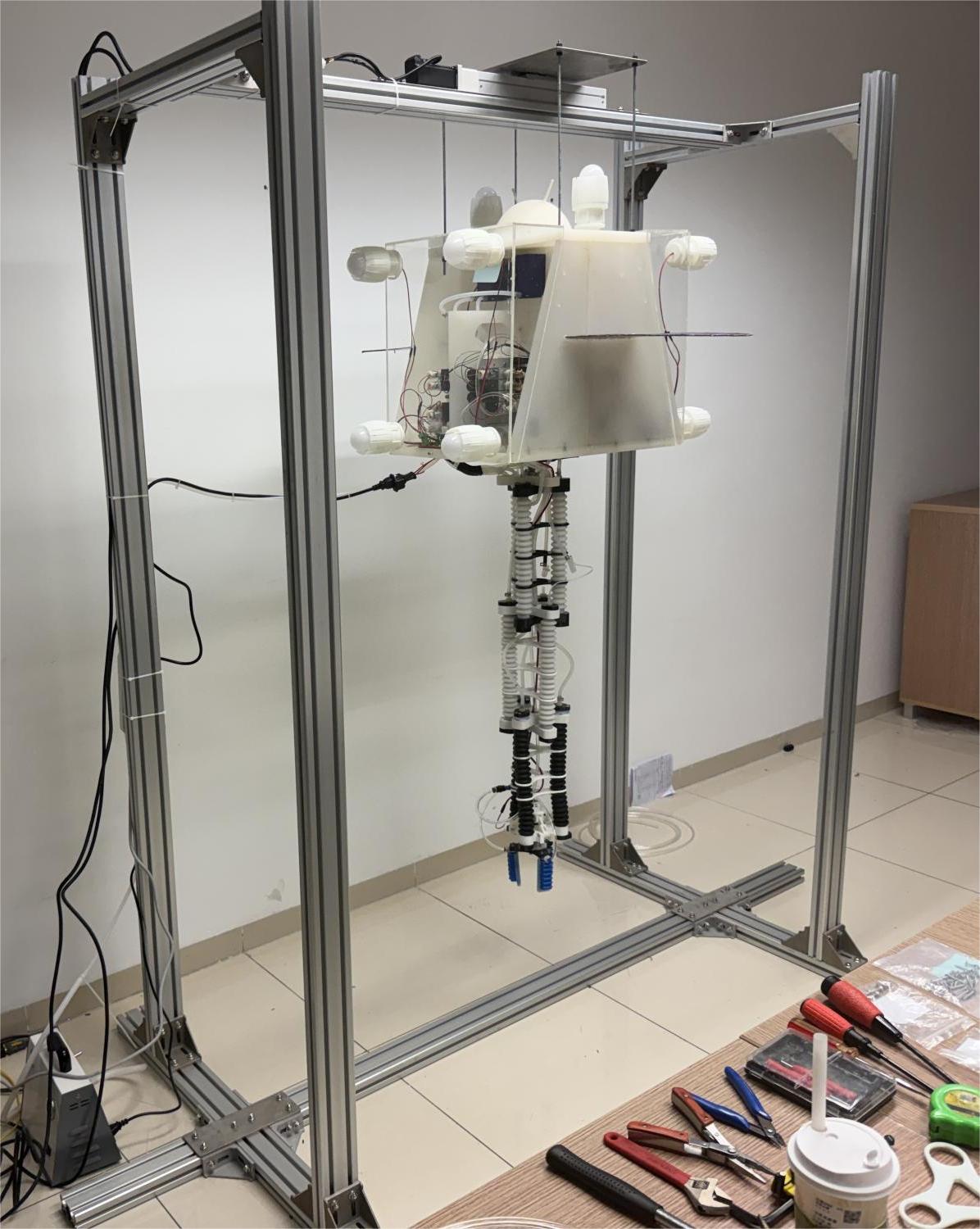
Mechanical Body
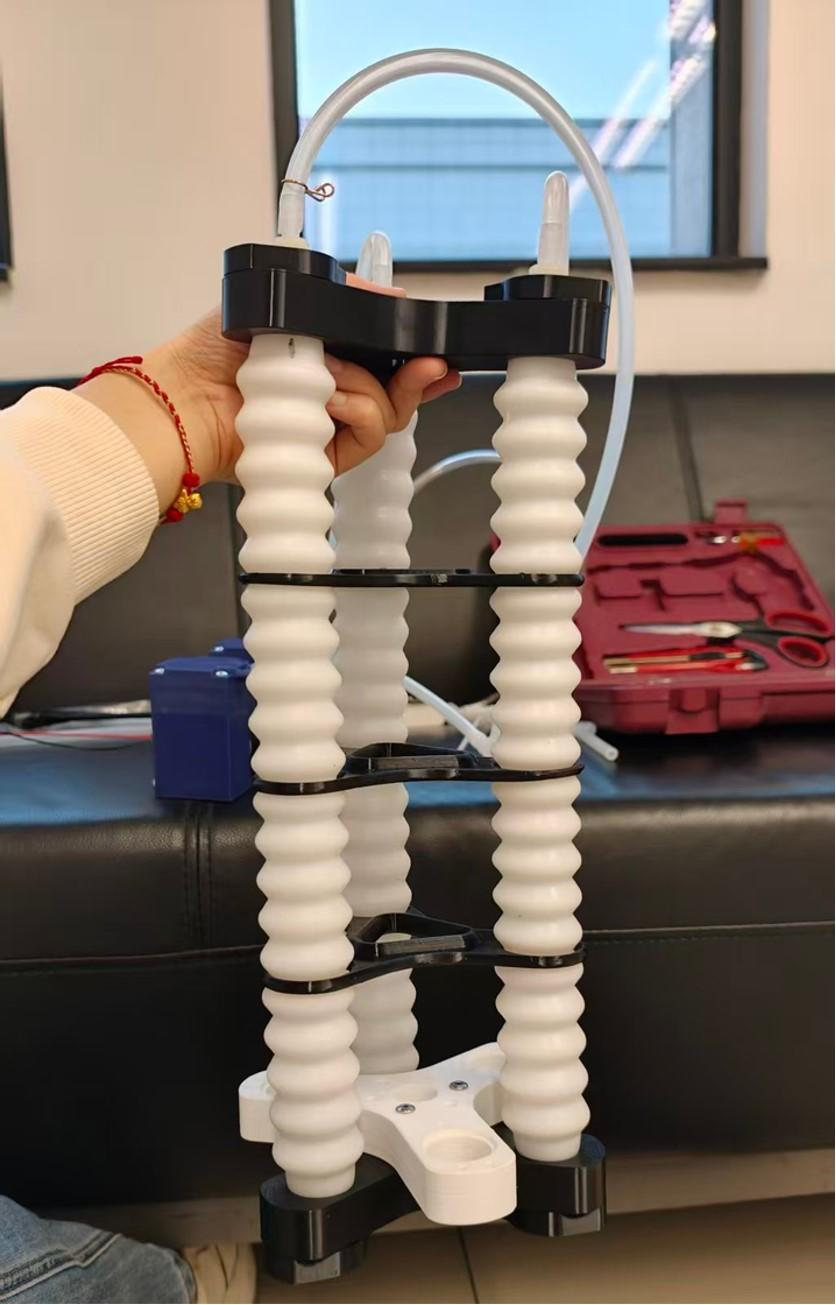
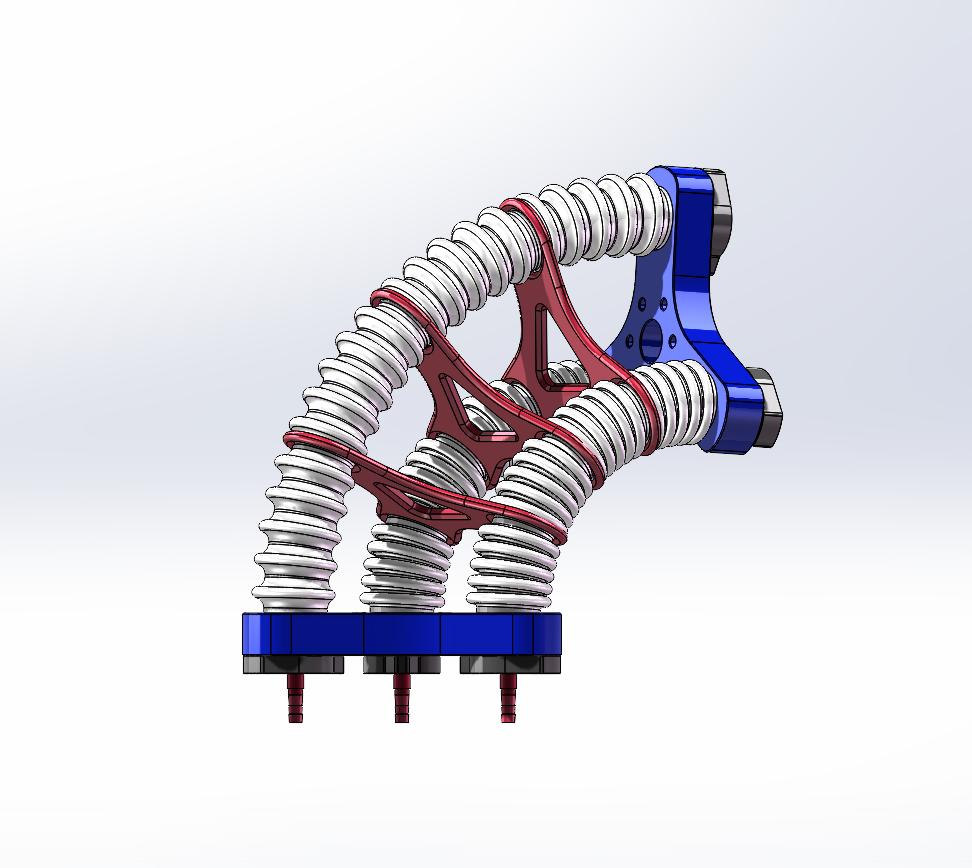
Extended State (Inflated grasping state)
When the fragments reach the capture range, the fuselage inflates and extends, ensuring a safe distance between the fuselage and the fragments.

Conveyor Belt Structure
It enable the fuselage to rotate 360 degrees, allowing for full coverage movement and expanding the area that can be grasped.
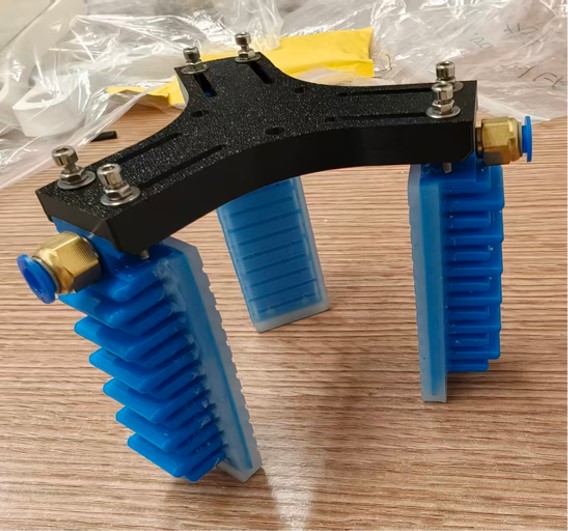
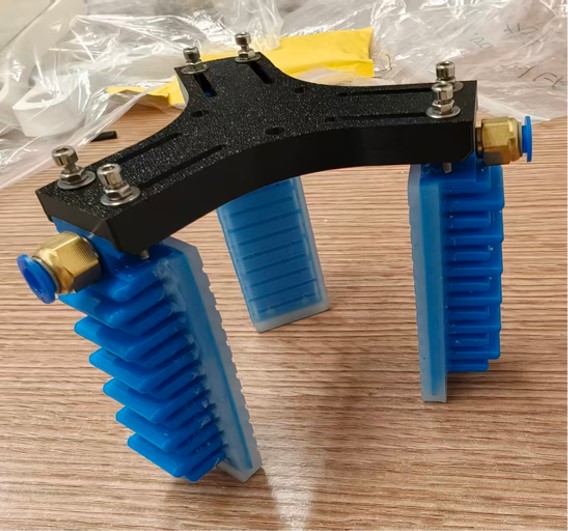
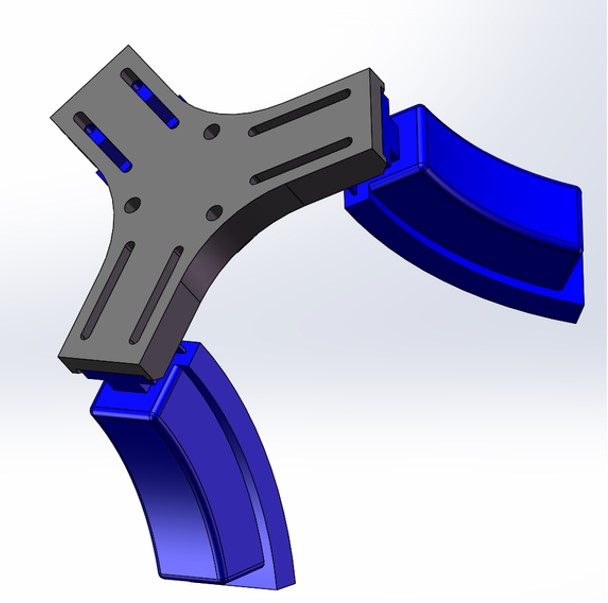
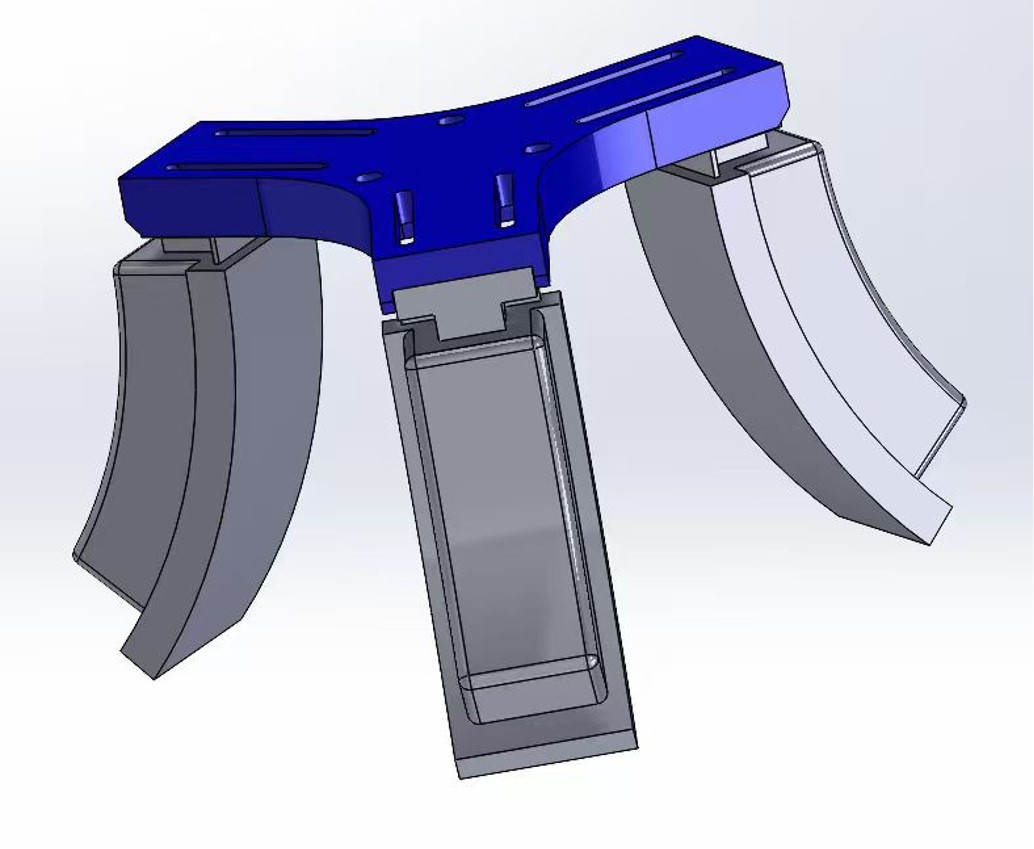
Soft Grabber
Performing flexible grasping on small irregular fragments significantly reduces the risk of secondary fragment generation.
Product Description
This air-driven soft bionic robotic arm is designed for the safe on-orbit capture of irregular space debris. Unlike rigid manipulators, its soft continuum structure enables enveloping grasps, significantly reducing collision impact and secondary fragmentation risks to enhance safety. The arm elongates by 198%, allowing satellite platforms to approach and capture from a safer distance, avoiding the high reaction forces typical of rigid systems. Targeting national space agencies and constellation operators, the solution addresses the critical need to minimize asset loss from collisions. With over 34,000 tracked fragments (>10cm) and millions of smaller hazards, the demand for active debris removal is accelerating. With the global market projected to reach $3–5 billion by 2030, this system offers significant commercial potential, promising a shift toward safer, more adaptive orbital robotics.
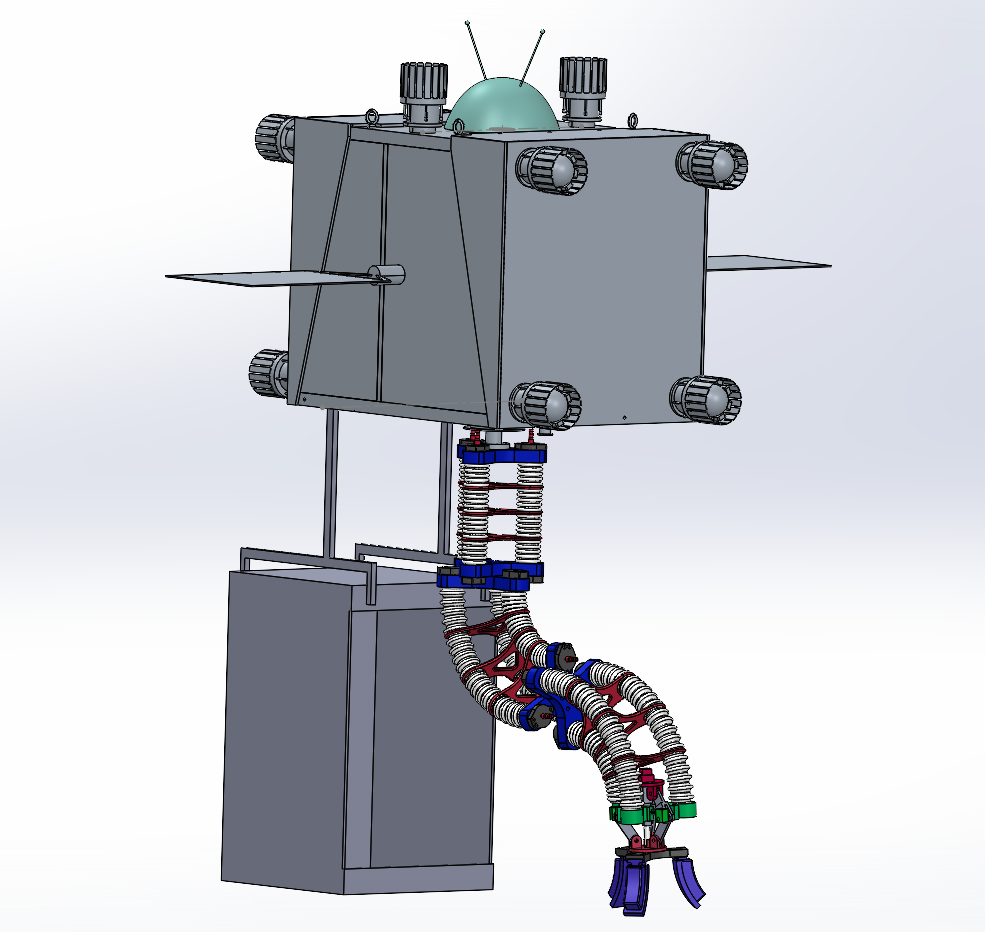
Our space-debris cleaning satellite that uses positive and negative air pressure to drive multi-module bellows actuators, enabling bio-inspired bending and grasping to solve the challenge of orbital debris removal.
Its technical principle is a continuous pneumatic drive system: multiple sets of bellows “skeletons” contain internal tension springs. Positive pressure inflation extends the elastic units, while negative pressure (vacuum) suction—working together with spring forces—compresses them. By creating length differences among different units, the arm forms complex 3D curves with three degrees of freedom (3-DOF) bending. Combined with a 360° rotating gear and an extendable structure, the system achieves high-precision, self-adaptive grasping of debris from any direction.
The robotic arm is integrated with a solar energy storage system, a radar detection system, and a four-sided Hall thruster acceleration system, together forming a complete debris-cleaning satellite.
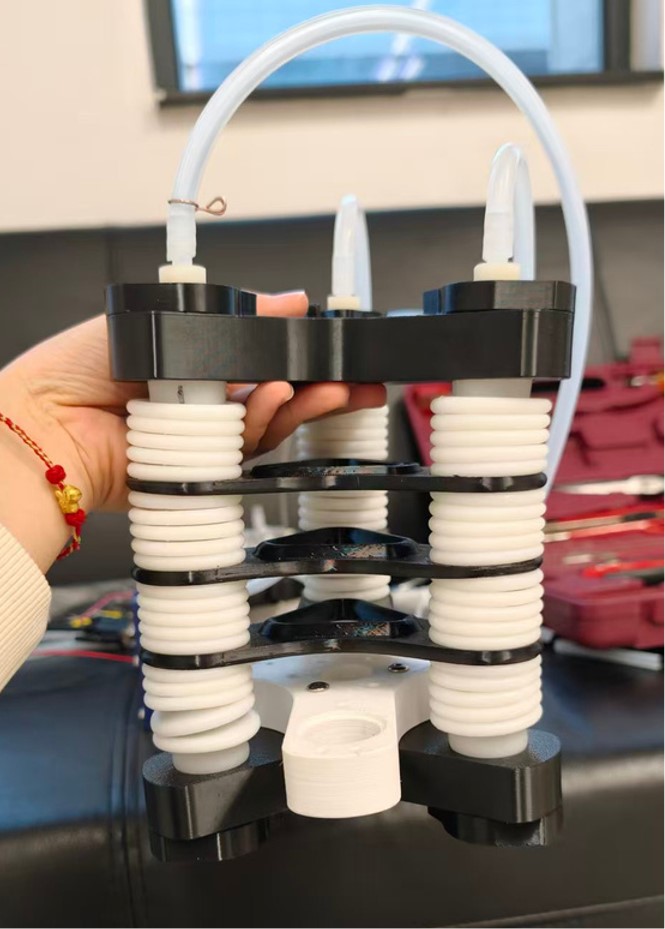
Contraction State (the initial state)
The initial mechanical arm contracts to reduce the overall volume of the satellite and lower the risk of additional collisions with other debris.
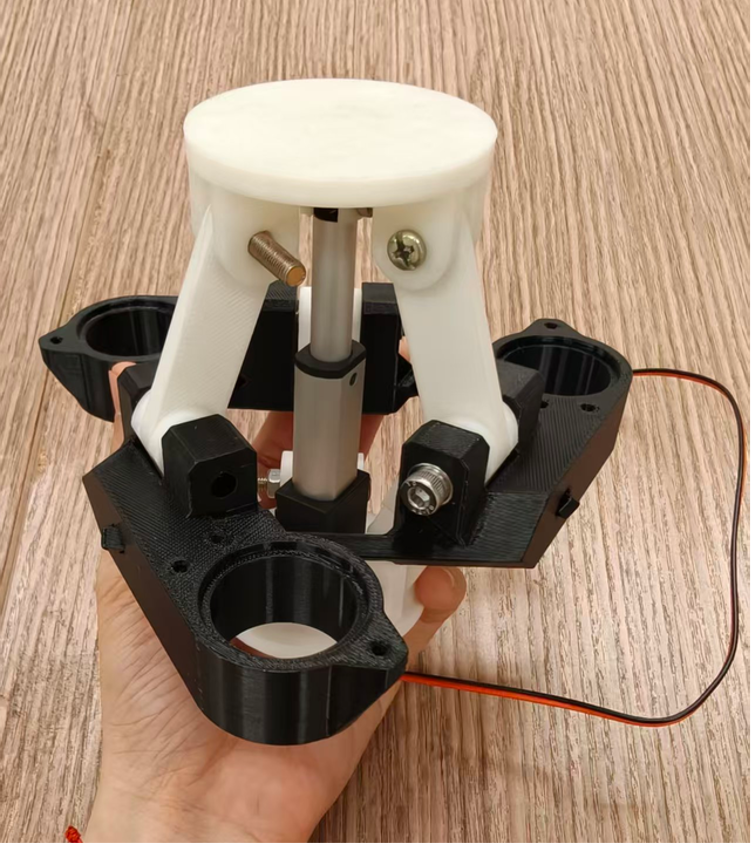
Fine-Tuning Structure
Fine-tune the position to 30 millimeters, so that the robotic arm can be adjusted when it deviates from the target position of the debris, and can complete the action of throwing it into the trash can.
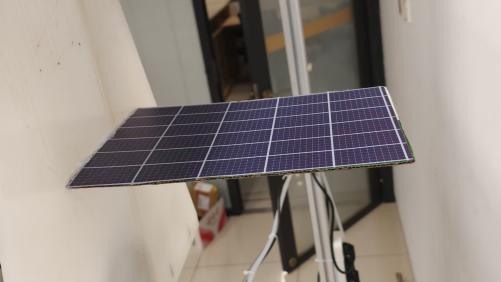
Solar Panal
Collect energy to enable the satellite to operate independently for a longer period of time
Our Model Compoents
How each component collaborate with each other
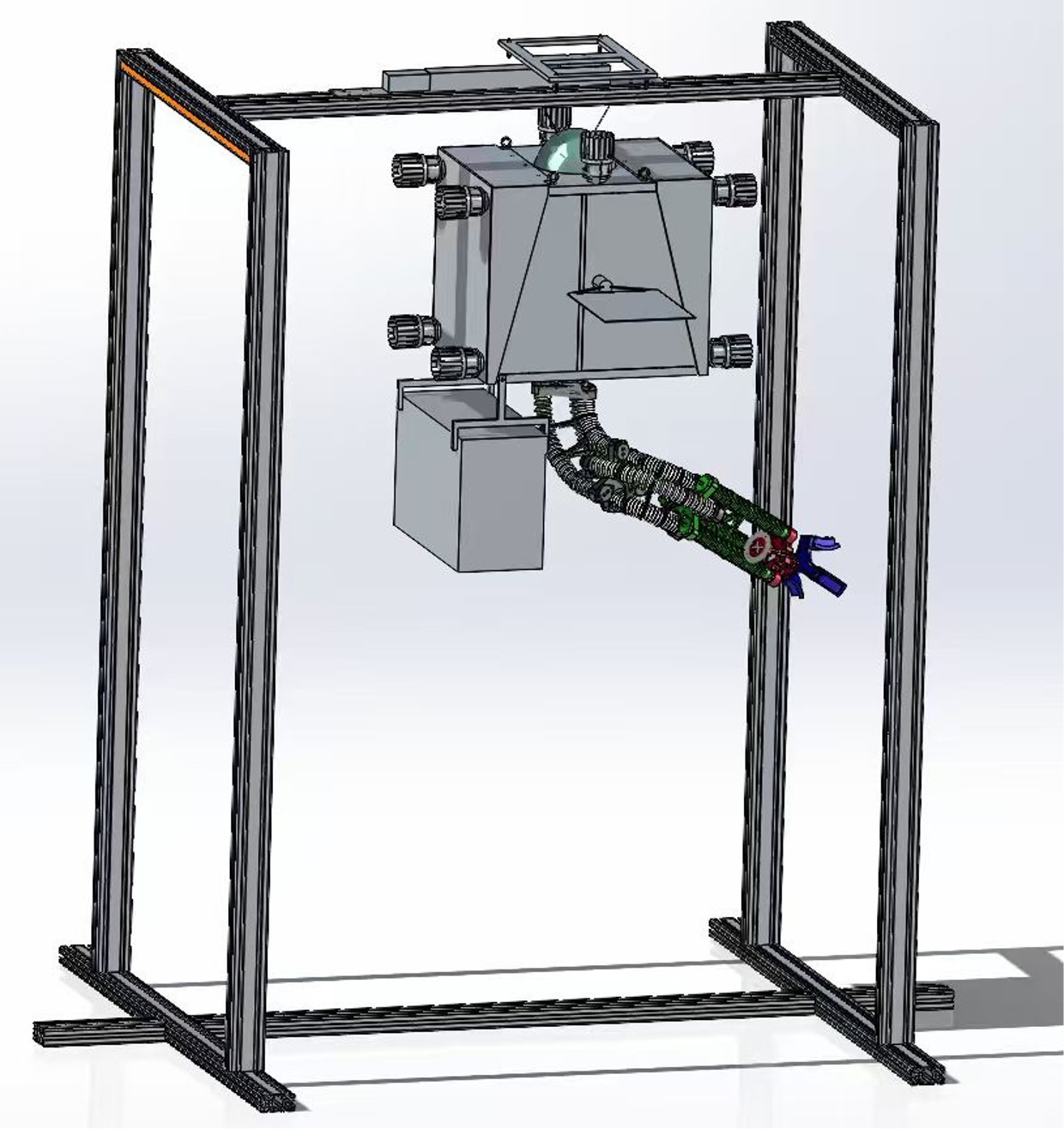
Entire Model
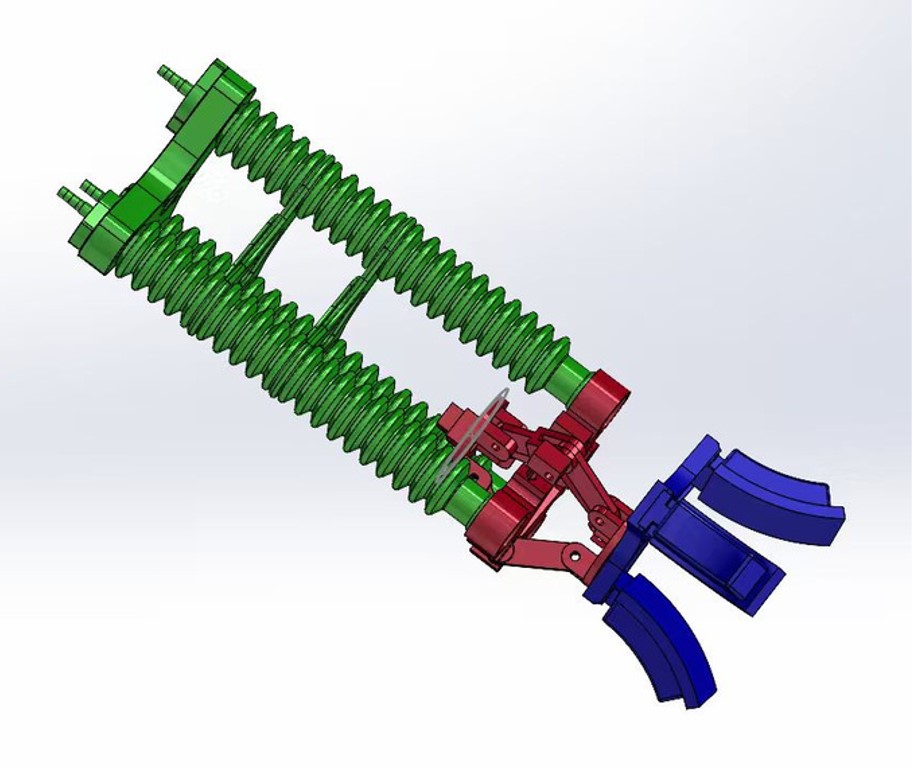
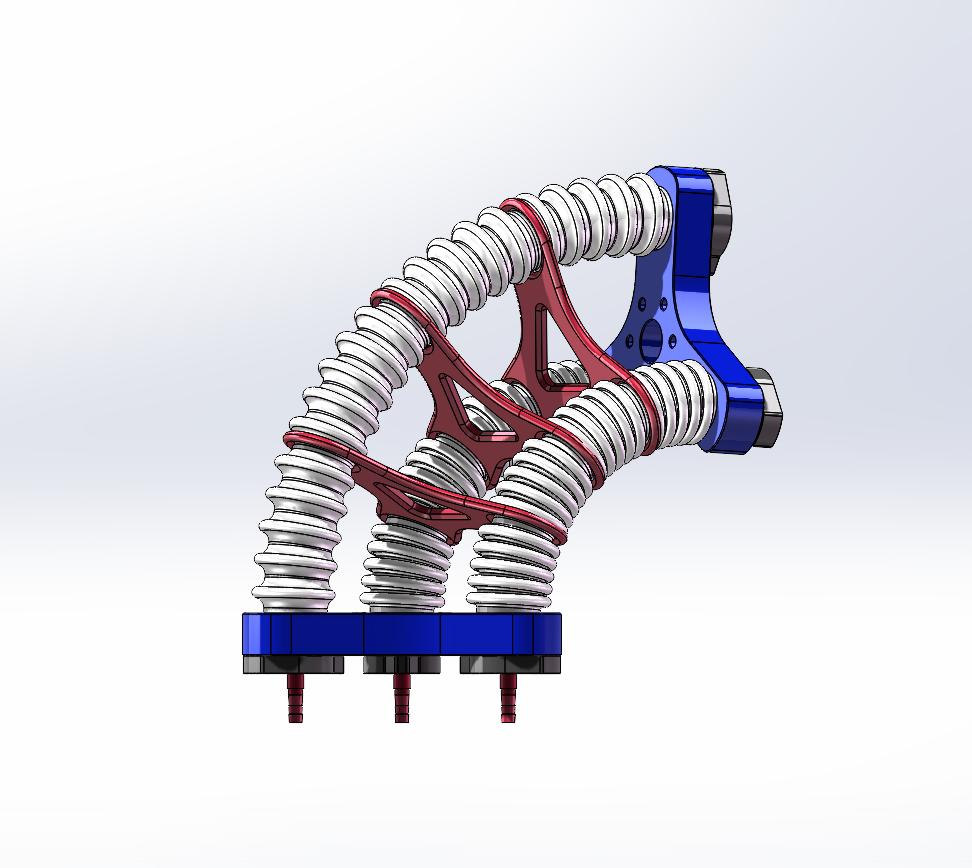
air-driven soft bionic robotic arm
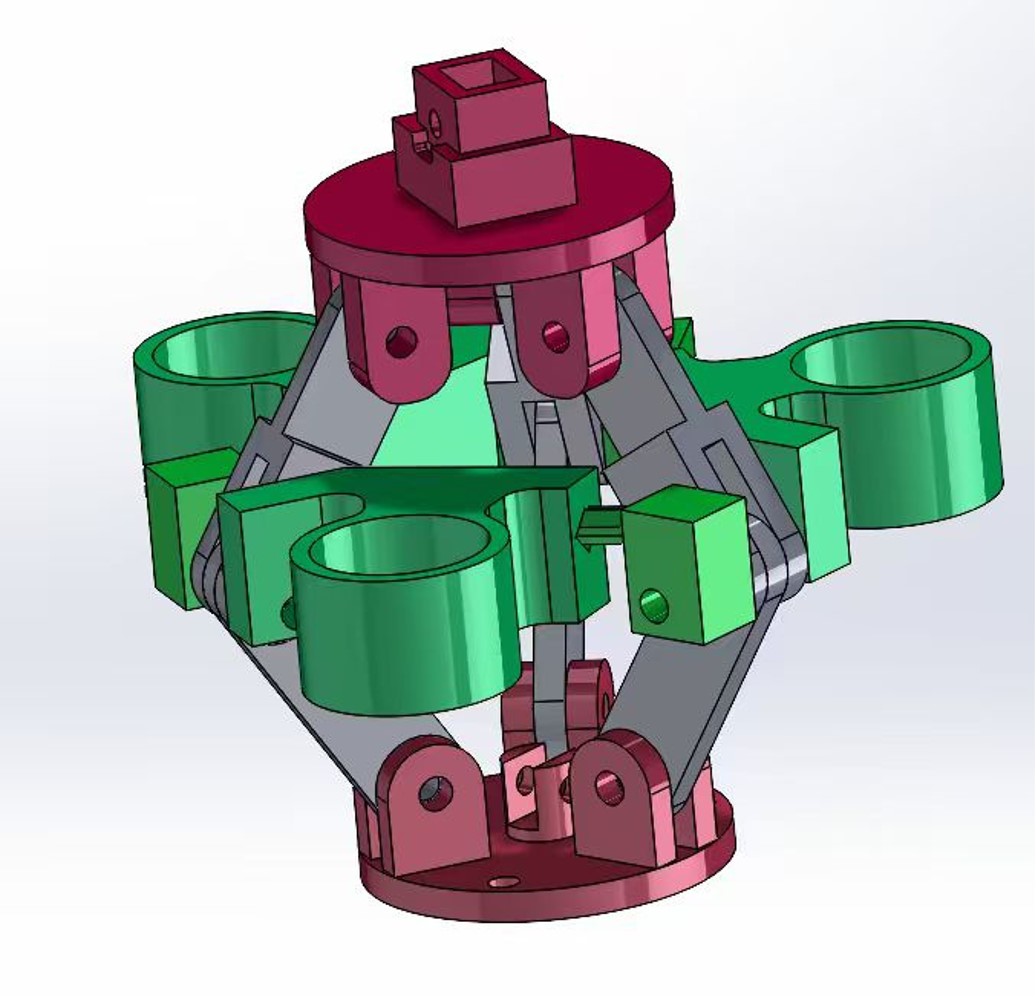
Fine-Tuning Struture
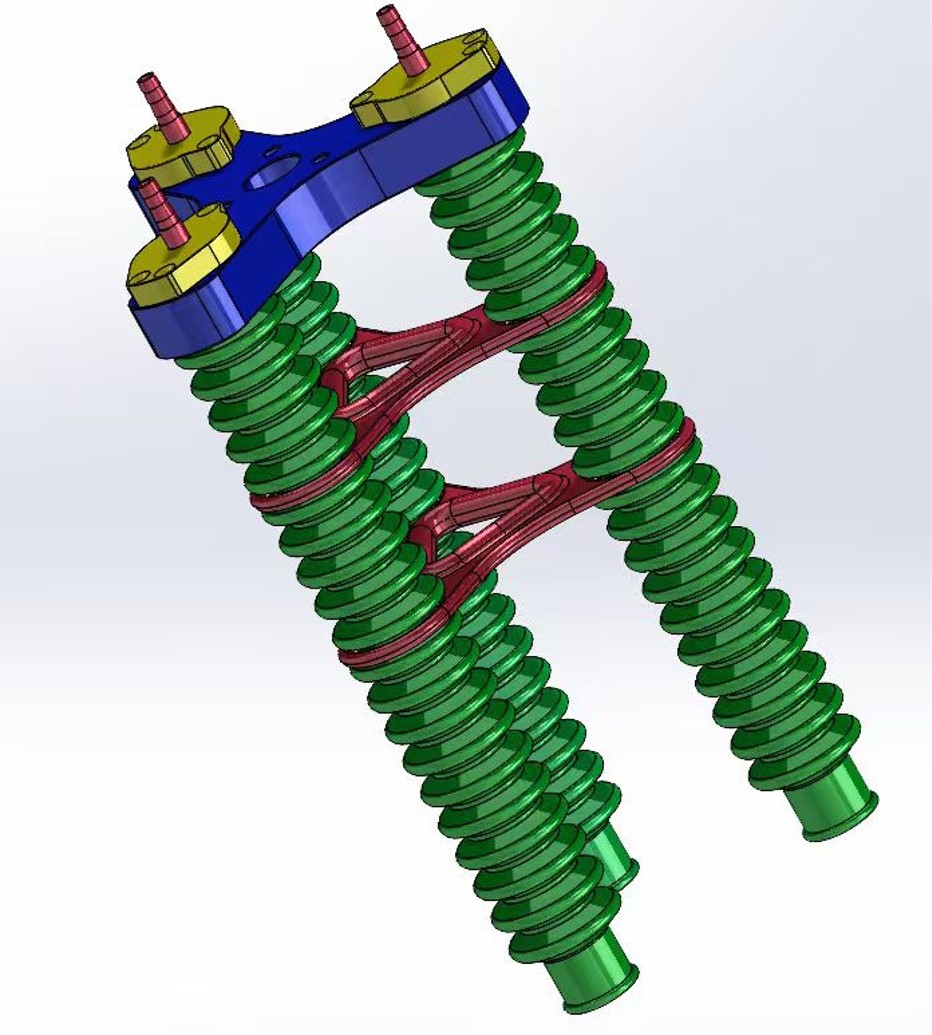
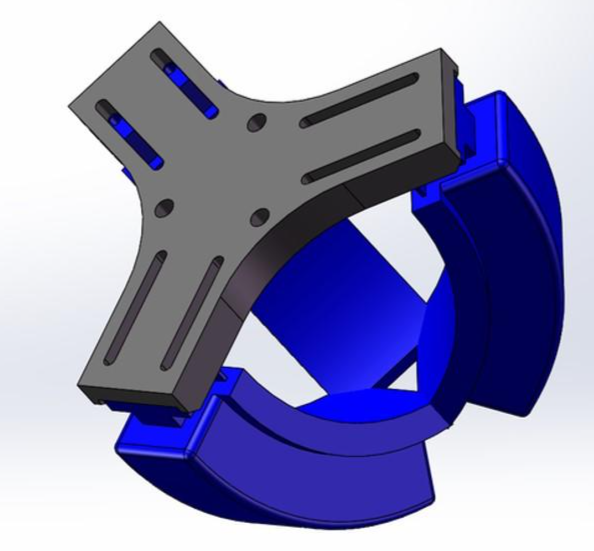
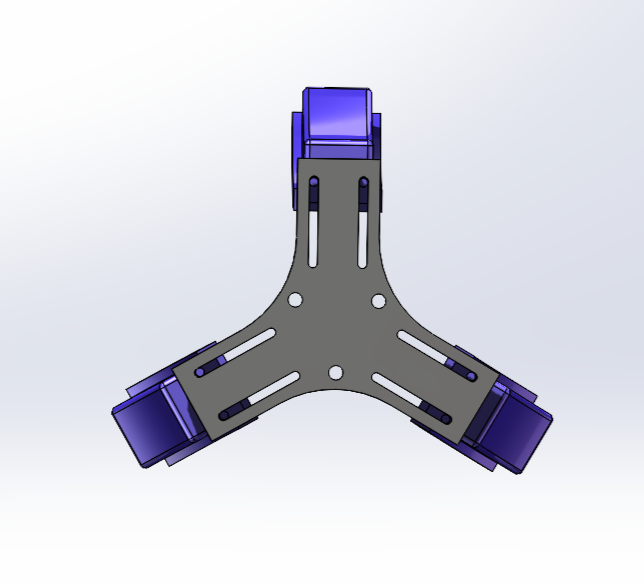
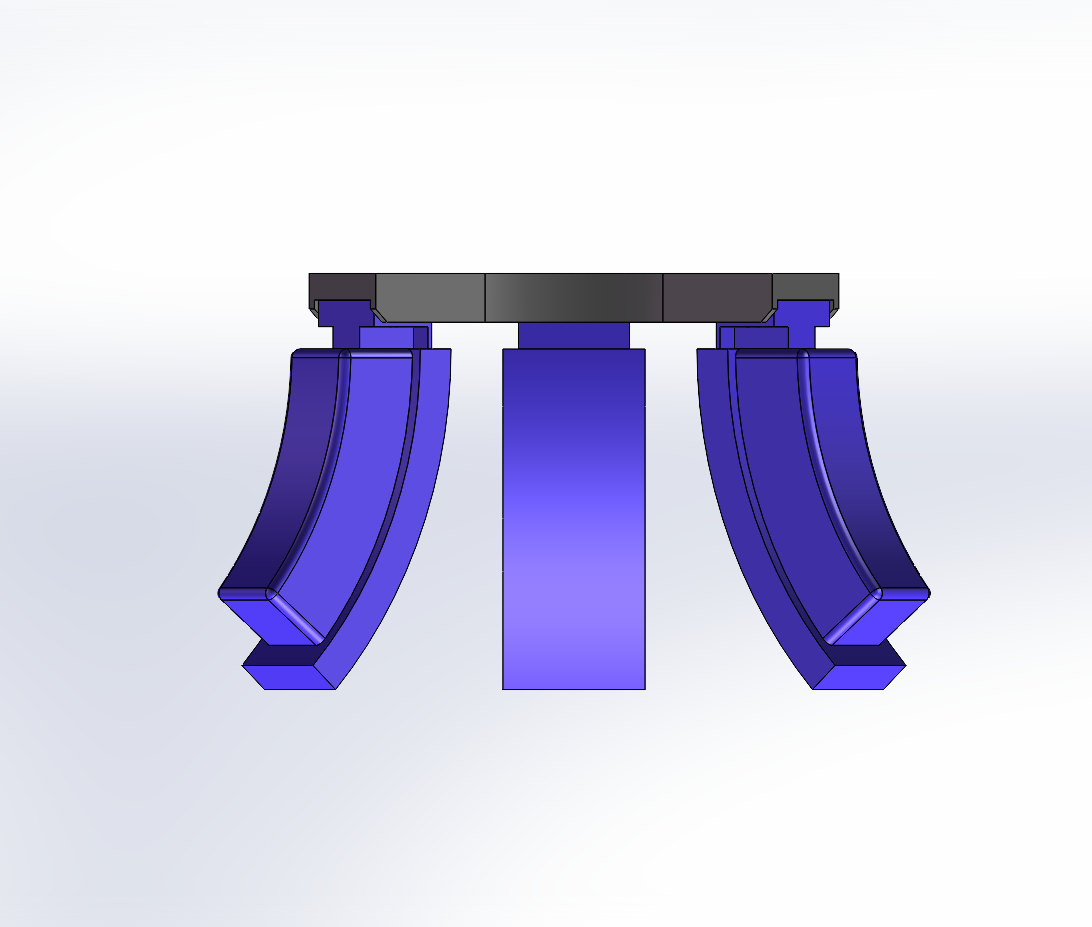
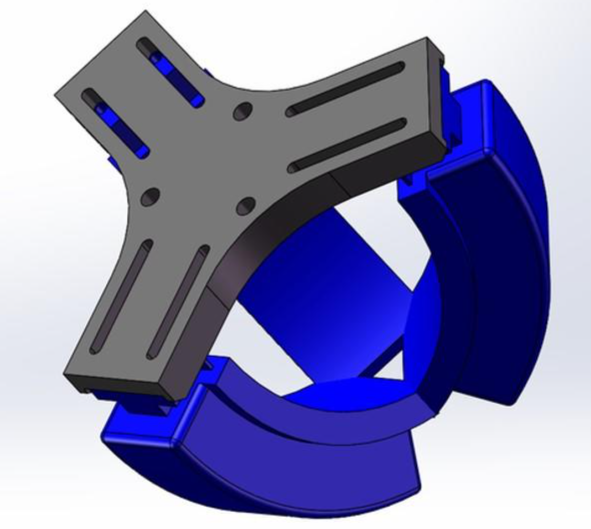
Soft robotic hand component
Phyiscal model Top View Front View Closed state Opened state
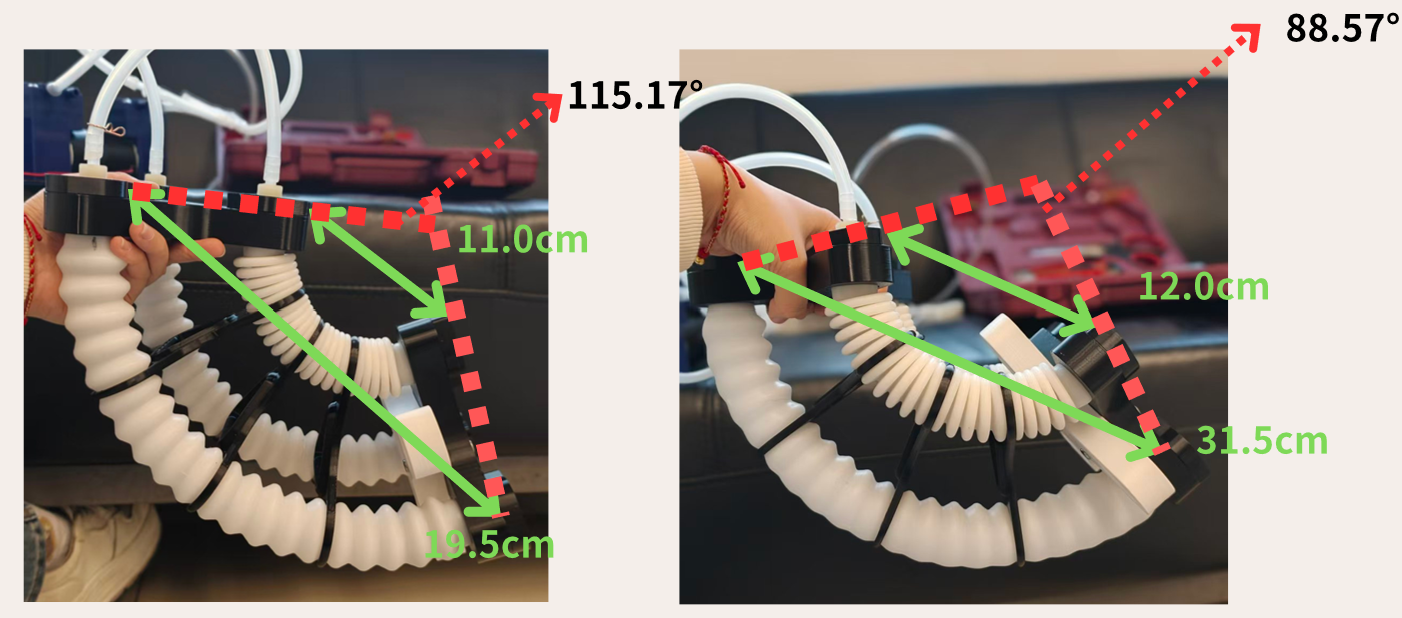
2 ways of bending
Dual-section extension can achieve a bend of approximately 115.17°, while single-section extension can achieve a bend of about 88.57°.
Through reasonable algorithmic pairing and coordination with radar recognition, the bending method can be accurately selected to reach the optimal grasping surface; the three-section bending theoretical class achieves a bend of 345.51°, providing a wide grasping range, enabling fragment collection, and bending like an elephant trunk to gather debris.
Pricing
Starter Plan
For individual users
$3,000,000
per satellite
Recommended
Pro Plan
For team users
$19,000
per unit
Enterprise Plan
For large teams
$99,000
per unit


